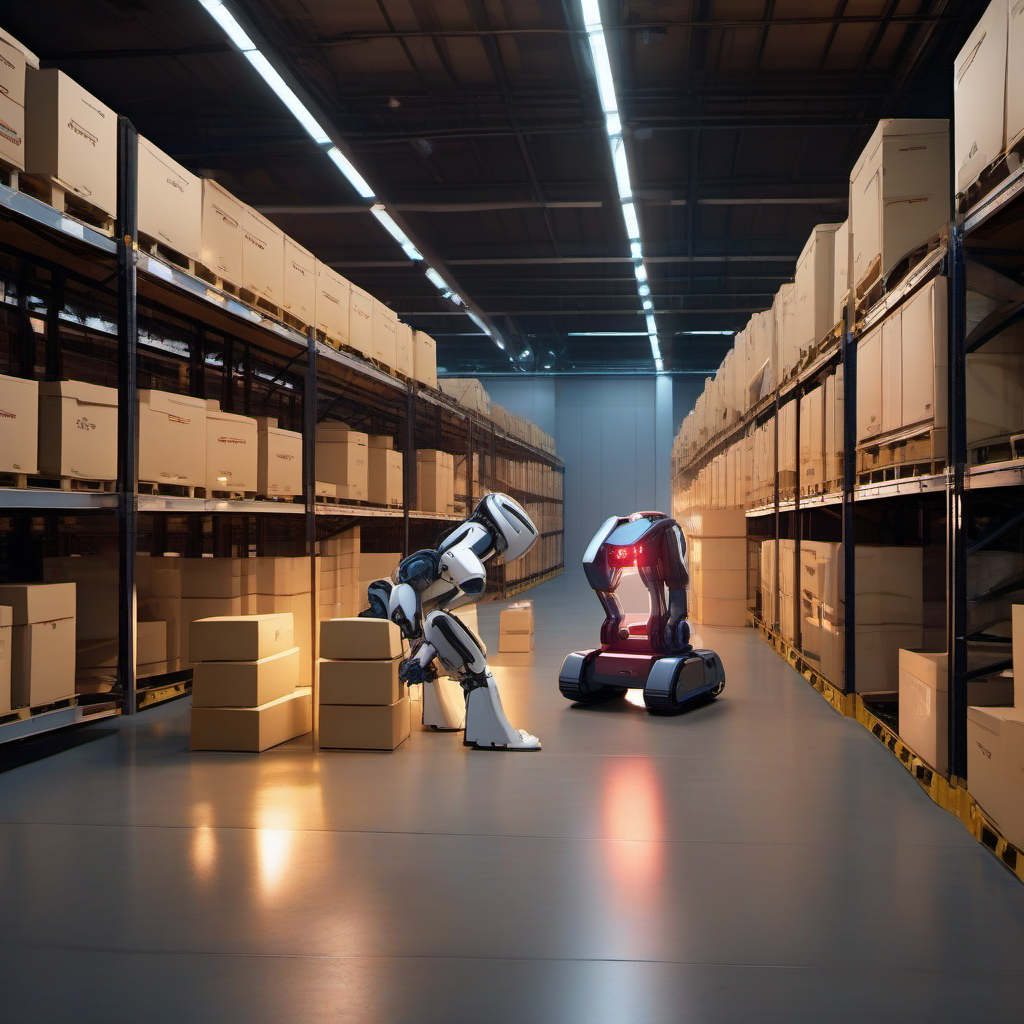
In a significant development for India’s logistics and manufacturing sectors, Bengaluru-based Hachidori Robotics is introducing a new line of autonomous mobile robots (AMRs) that operate without the need for tracks, magnets, or facility shutdowns. This innovation could dramatically lower the cost and complexity of warehouse automation, making it accessible to a broader range of Indian factories and warehouses, especially older facilities that have been unable to leverage automation due to infrastructure limitations.
Robots that find their own way
Hachidori Robotics was founded in 2019 by Janakiram Annam, Ramanathan Venkataraman, Venkataraman Natarajan, and Krishna Vaidyanathan. The company specializes in deep-tech robotics for intralogistics, focusing on the creation of AMRs that autonomously navigate industrial environments. Unlike traditional automated guided vehicles (AGVs), which require fixed paths and infrastructure modifications, Hachidori’s robots use a patented indoor positioning system akin to indoor GPS. This allows them to determine their own routes using sensors and software, enabling seamless navigation around obstacles and dynamic re-routing as needed.
The company claims its robots can be deployed in operational factories and warehouses without necessitating downtime or expensive infrastructure changes. Furthermore, their cost is reportedly a third of that of imported AMRs, potentially providing a more viable automation solution for Indian businesses. Hachidori’s product lineup includes unit load carriers, tuggers, and pallet jacks, capable of handling loads from under 50 kg to up to 4000 kg, all powered by LiFePO4 batteries.
The competitive landscape and funding environment
Hachidori Robotics is entering a competitive market, with global players like KUKA, ABB, and Honeywell already offering sophisticated warehouse automation solutions. However, the cost and infrastructure demands of these imported systems have been a barrier for many Indian companies. By offering a lower-cost, non-disruptive alternative, Hachidori aims to fill a significant gap in the market.
Currently in its seed funding stage, Hachidori has raised approximately $3 million, with investments from entities such as the Jacob Hansen Family Trust. The funding environment for robotics and automation startups in India is becoming increasingly favorable, driven by a surge in e-commerce and manufacturing sectors seeking efficiency and cost reduction. However, securing subsequent funding rounds will be crucial for Hachidori to scale its operations and enhance its product offerings.
Implications for India’s startup ecosystem
The introduction of Hachidori’s track-free AMRs could have broad implications for India’s startup ecosystem, particularly in the logistics and manufacturing sectors. By lowering the entry barriers for automation, Hachidori could enable a wider range of Indian businesses to adopt advanced robotics, potentially enhancing productivity and competitiveness. This innovation aligns with the Indian government’s push towards ‘Make in India’ and the digitalization of the manufacturing sector, fostering a fertile ground for startups in robotics and automation.
For founders and investors, Hachidori’s approach highlights the potential of leveraging deep-tech innovations to address local market challenges. As the company aims to expand its market presence, it could inspire further investment and innovation in the Indian robotics sector.
Looking ahead, Hachidori Robotics is poised to scale its operations and potentially explore international markets. For investors and industry watchers, the key development to monitor will be the company’s ability to secure further funding and partnerships to expand its production capabilities and market reach. This could be a critical step in solidifying its position as a leader in the Indian robotics landscape.