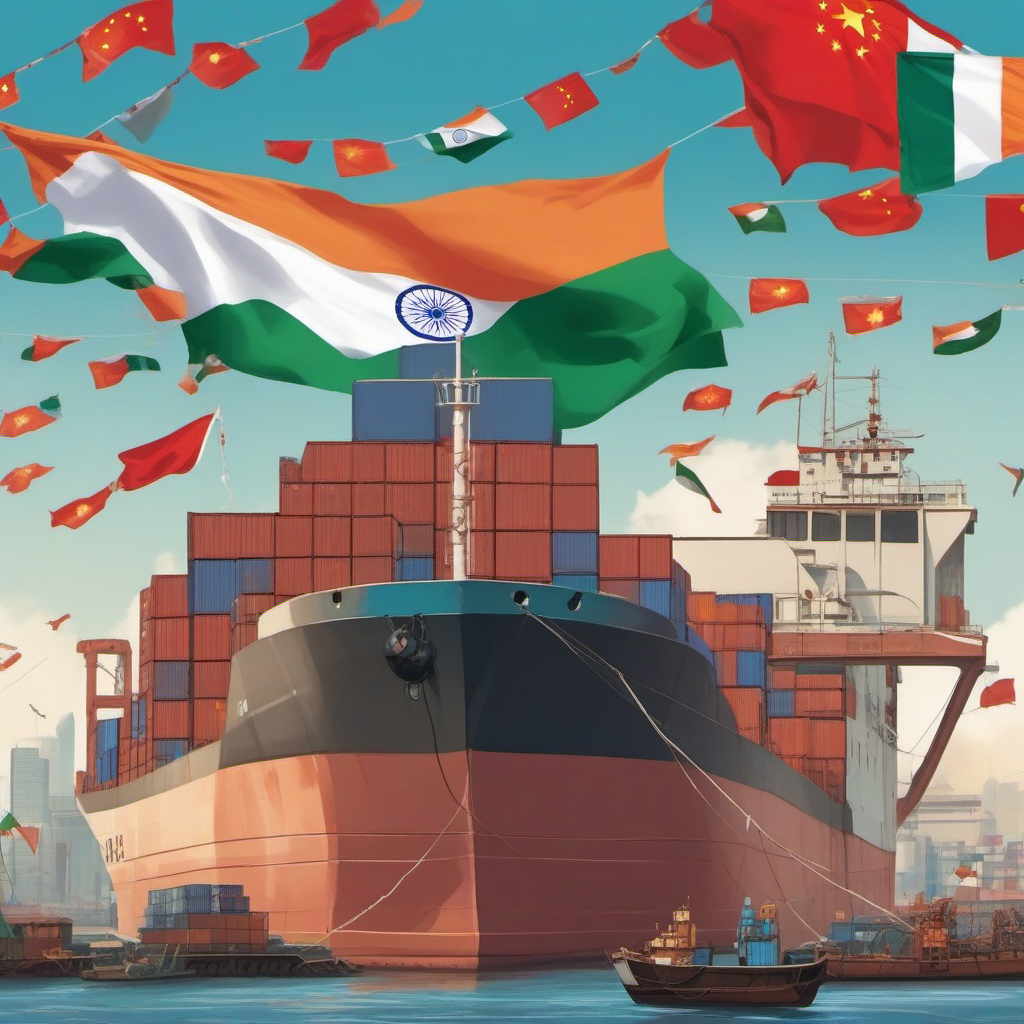
India Takes a Step Towards Reducing Container Manufacturing Dependence
India has initiated a significant move to break China’s near-monopoly on container manufacturing, a sector where Chinese firms produce over 95% of the world’s dry cargo containers. The unveiling of the first export-import (EXIM) grade container manufactured in India marks a potential shift in the global logistics landscape. This development arrives amidst increasing scrutiny of China’s dominance in the industry, which has faced allegations of price-fixing that doubled container prices between 2019 and 2021.
### India’s Foray into Container Manufacturing
The first Indian-made EXIM grade container was unveiled by Union Minister Sarbananda Sonowal at the Maersk-CONCOR Inland Container Depot in Dadri, Uttar Pradesh. This container, built by the DCM Shriram Group, was developed for A.P. Moller-Maersk, the world’s second-largest shipping line. While India has had some container manufacturing capacity, this marks the first time a container has been certified to EXIM standards and accepted into a global carrier’s fleet.
Following this milestone, Maersk placed an order for 1,000 additional India-made containers, indicating a transition from prototype to procurement. Although this order is modest by global standards, where carriers purchase tens of thousands of units annually, it signifies a crucial step in establishing India as a viable player in the international container manufacturing market.
### The Competitive Landscape and Economic Challenges
China’s dominance in container manufacturing is a result of strategic industrial policies, including scale economies, cheaper steel, and substantial state support. The cost of producing a 40-foot container in India is significantly higher, approximately ₹3.5-4 lakh, compared to ₹1.5-2 lakh in China. Factors such as logistics and unit economics, including steel prices and production scale, contribute to this disparity.
To address these challenges, the Indian government has allocated ₹10,000 crore over five years under the Container Manufacturing Assistance Scheme. This initiative aims to increase India’s annual container production capacity tenfold, reaching 7.5 lakh TEUs. The scheme’s success will depend heavily on its ability to improve cost efficiency and production scale, making Indian containers competitive on the global stage.
### Implications for India’s Startup Ecosystem
The move to establish a robust container manufacturing industry in India could have several implications for the country’s startup ecosystem. For one, it could spur innovation and entrepreneurship in related sectors, such as logistics technology and supply chain management. Additionally, reducing reliance on Chinese imports could enhance the resilience of Indian startups involved in manufacturing and exporting goods, providing them with a more stable and potentially cost-effective supply chain.
Furthermore, the initiative aligns with India’s broader efforts to become a global manufacturing hub, complementing initiatives such as ‘Make in India’. By developing a domestic container manufacturing industry, India could attract more investment into its logistics and infrastructure sectors, creating new opportunities for startups and established firms alike.
### The Road Ahead
The introduction of Indian-made EXIM grade containers is a promising start, but significant challenges lie ahead. The focus will now be on scaling production and reducing manufacturing costs to ensure competitiveness against Chinese counterparts. For investors and industry stakeholders, the effectiveness of the Container Manufacturing Assistance Scheme will be crucial in determining the viability of India’s entry into this market.
For founders and engineers, the next step will be to monitor how effectively these government initiatives translate into tangible improvements in production capacity and cost efficiency. The outcome will likely influence future investment decisions and strategic planning for companies involved in India’s logistics and manufacturing sectors.