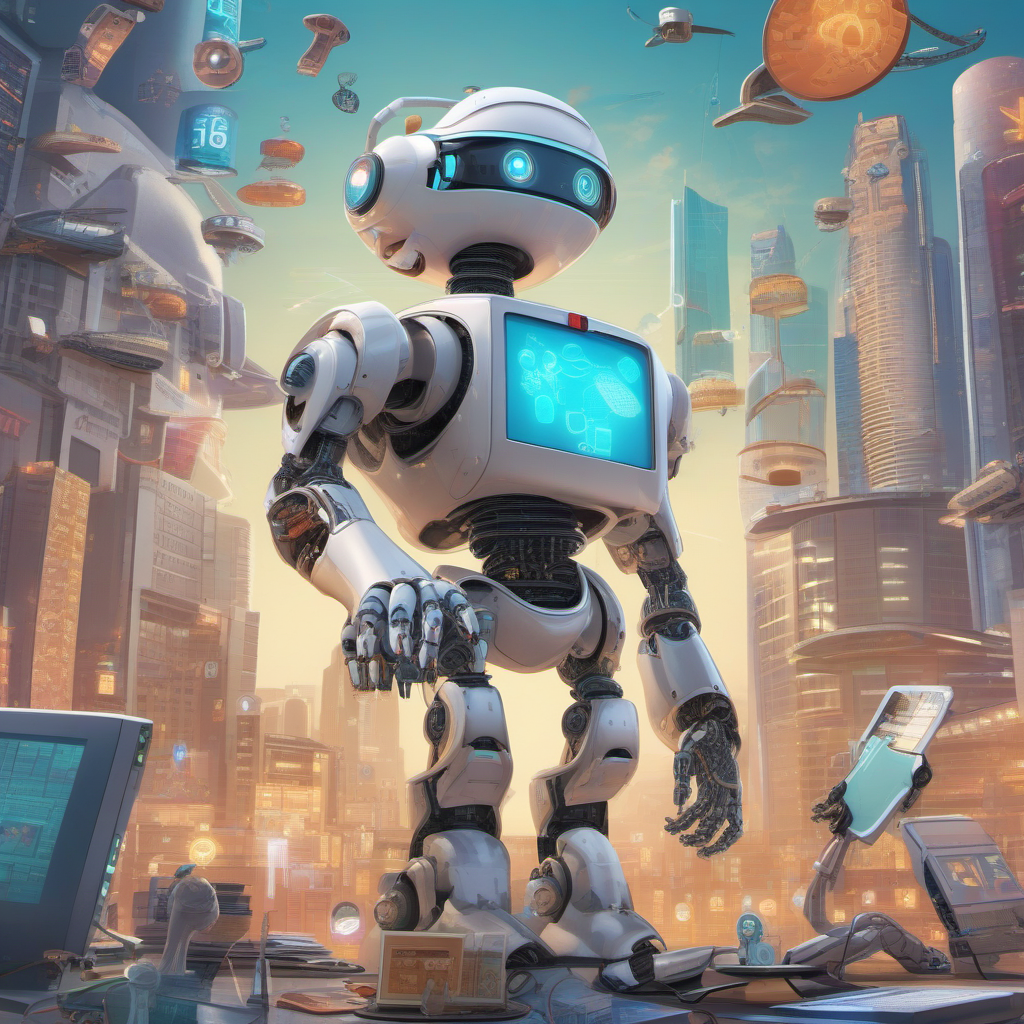
India’s burgeoning robotics landscape is witnessing a significant milestone with the rise of iHUB Robotics, a Kerala-based startup dedicated to advancing humanoid robots. This venture is crucial as it aims to localize production in a sector dominated by imports, which often result in high costs and accessibility issues for Indian businesses. By developing robots end-to-end in India, iHUB Robotics is poised to transform industries ranging from healthcare to education.
### Building Humanoids End-to-End
iHUB Robotics, established in 2022 in Ernakulam, Kochi, has been developing its capabilities since its founding. The startup’s first major product, Tara Gen-1, was unveiled in 2024. This semi-humanoid service robot boasts a remarkable ability to speak over 100 languages, recognize faces and gestures, and engage in contextual conversations. Its navigation capabilities are powered by Simultaneous Localization and Mapping (SLAM) technology. Tara Gen-1 is available in variants tailored for specific sectors such as hospitality, healthcare, education, banking, and public services. To date, approximately 35 units have been deployed across three countries.
The company also launched Daksha, an industrial humanoid capable of lifting heavy payloads and operating at considerable heights. Both robots are built on what iHUB Robotics terms “physical AI,” which integrates Vision-Language-Action models. This approach connects visual input with language comprehension and physical movement, setting their technology apart from conventional text-based AI models.
### The Competitive Landscape
India’s robotics sector has long relied on imported technology, making iHUB Robotics’ local manufacturing efforts highly significant. The startup’s focus on deep tech and physical AI distinguishes it from competitors who primarily utilize imported hardware. By offering a localized solution, iHUB Robotics provides a cost-effective alternative that can be serviced faster and more efficiently.
The startup is currently in its pre-seed funding stage, having raised ₹4.3 crore (about $520,000) from undisclosed US-based angel investors. This financial backing is critical as it enables the company to refine its product offerings and expand its market presence. With a team of approximately 65 employees, iHUB Robotics is leveraging its deep tech expertise to carve out a niche in a competitive landscape.
### Implications for India’s Startup Ecosystem
The emergence of iHUB Robotics is indicative of a broader trend in the Indian startup ecosystem, where local companies are increasingly focusing on high-tech innovations. By reducing dependency on imports, iHUB Robotics not only addresses cost and accessibility challenges but also fosters a culture of innovation and self-reliance within India. This shift could encourage more startups to explore deep tech and robotics, potentially attracting more investment into the sector.
Furthermore, the company’s B2B and B2G business model positions it well to collaborate with government and private sectors, addressing specific needs in public services and industrial applications. As such, iHUB Robotics could play a pivotal role in modernizing India’s digital infrastructure and advancing its technological capabilities.
The next phase for iHUB Robotics involves scaling its operations and securing additional funding to support product development and market expansion. For investors and stakeholders, the company’s progress will be a key indicator of the potential for locally developed robotics solutions in India. As such, the performance of iHUB Robotics could influence investment trends and encourage further innovation in the Indian robotics sector.