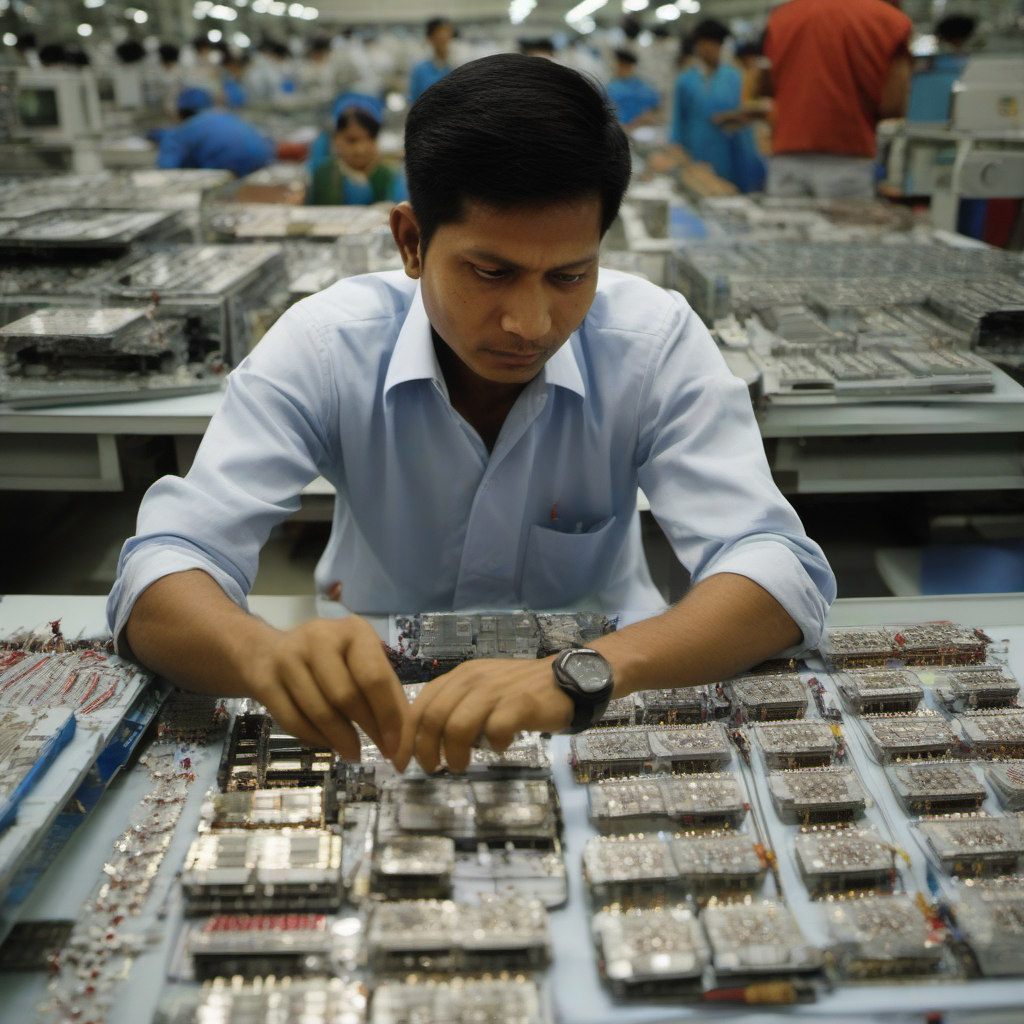
Foxconn, the Taiwanese electronics giant, has injected Rs 319 crore ($37.2 million) into its Indian subsidiary, Foxconn Hon Hai Technology India Mega Development Private Limited, through its Singapore unit. This move raises Foxconn Singapore’s stake in the Indian arm to nearly 100%, underscoring the company’s commitment to strengthening its manufacturing footprint in India. This development is significant as it aligns with the broader trend of global electronics companies diversifying their supply chains, particularly in light of ongoing geopolitical tensions and the need to reduce dependency on China.
### Foxconn’s Expanding Indian Operations
Hon Hai Precision Industry, commonly known as Foxconn, has been steadily increasing its investments in India. This latest infusion of capital follows a $1.5 billion investment earlier in 2025 into its Tamil Nadu-based subsidiary, Yuzhan Technology India. Foxconn’s Indian operations are predominantly located in Tamil Nadu, with significant facilities in Sriperumbudur near Chennai, where it assembles iPhones. The company is also expanding in Karnataka, with a 300-acre project in Devanahalli near Bengaluru expected to become a major iPhone assembly site.
Related Posts




Foxconn’s expansion in India is part of its “3+3+3” strategy, which focuses on emerging industries such as electric vehicles, digital health, and robotics, supported by advancements in artificial intelligence, semiconductors, and next-generation communication technologies. This strategy aims to leverage India’s growing market potential and skilled workforce to drive innovation and production efficiency.
### Context and Competitive Landscape
Foxconn’s move to bolster its Indian subsidiary’s stake comes as part of a broader industry shift where companies are seeking to diversify their manufacturing bases. Apple, Foxconn’s primary client, has been expanding its production in India, driven by the need to mitigate risks associated with over-reliance on Chinese manufacturing. Apple’s commitment to the Indian market is evident from its recent retail expansion, including the opening of its sixth store in Mumbai earlier this year.
Foxconn’s competitors, such as Pegatron and Wistron, are also enhancing their presence in India, recognizing the country’s potential as a global manufacturing hub. The Indian government’s production-linked incentive schemes and “Make in India” initiative have further encouraged these investments by providing financial incentives to boost local manufacturing capabilities.
### Implications for India’s Startup Ecosystem
Foxconn’s increased investment in India signals a positive outlook for the country’s electronics manufacturing sector, which could have ripple effects on the broader startup ecosystem. The influx of capital and technology could stimulate local supply chains, create job opportunities, and foster innovation in related industries. Furthermore, the presence of major global players can attract ancillary businesses and startups specializing in components, logistics, and other support services.
For Indian startups, especially those in tech manufacturing and supply chain solutions, Foxconn’s expansion presents opportunities for collaboration and growth. It also highlights the importance of building robust local ecosystems that can support large-scale manufacturing operations.
As Foxconn continues to deepen its roots in India, the focus will likely be on how it integrates with local suppliers and workforce, and the potential spillover benefits to the Indian technology and startup landscape. Investors and founders should watch for further developments in Foxconn’s strategic initiatives and the subsequent opportunities they may present for local startups and entrepreneurs seeking to capitalize on new market dynamics.