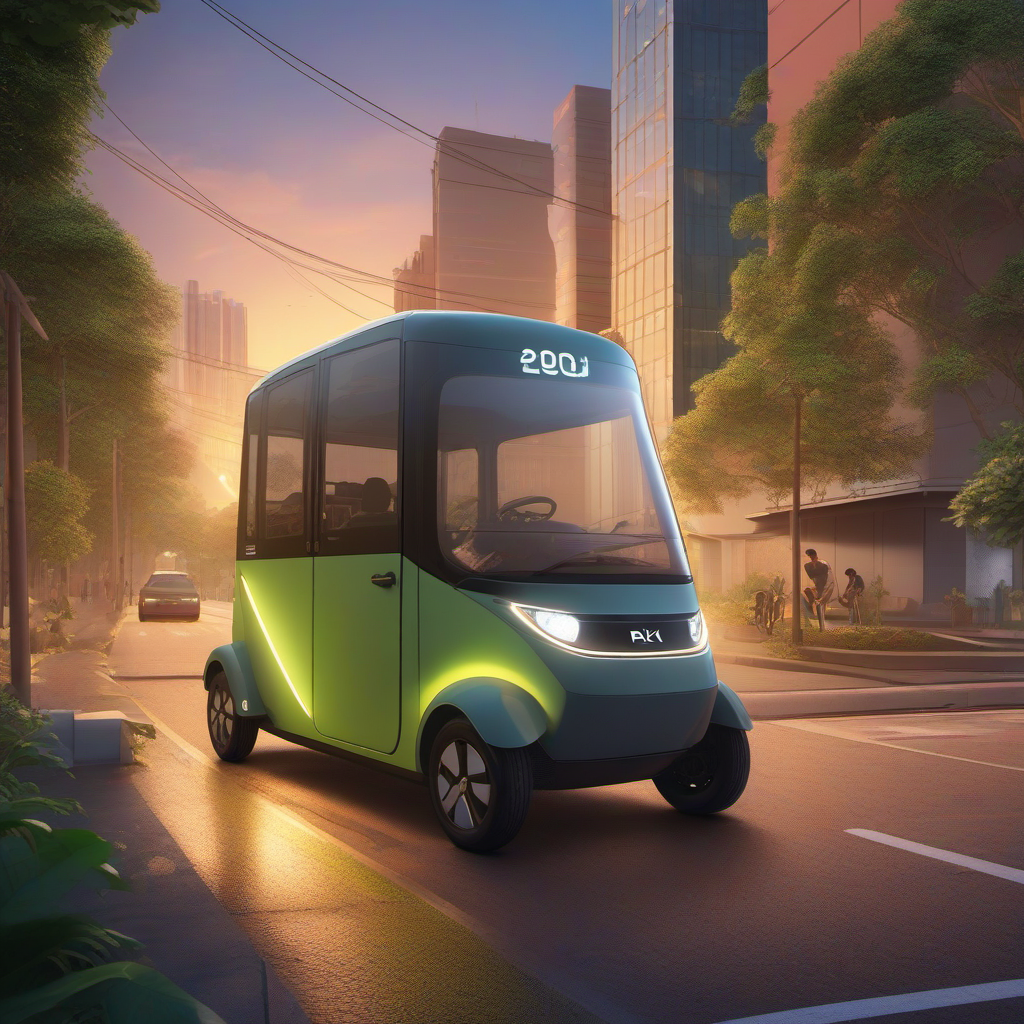
Delhivery, one of India’s leading logistics companies, has taken a significant step toward sustainable logistics by partnering with Bajaj Auto to deploy 200 Bajaj RIKI eCarts across its last-mile delivery network. The initiative marks a notable shift in the logistics sector as companies aim to cut emissions and enhance efficiency in urban deliveries. The deployment will initially target Tier-2 and Tier-3 cities, with plans to expand to a total of 1,500 electric three-wheelers by 2027.
### Delhivery and Bajaj Auto’s Electric Fleet Initiative
The collaboration between Delhivery and Bajaj Auto is aimed at integrating electric vehicles into the logistics provider’s operations, thereby reducing emissions and optimizing delivery routes. The Bajaj RIKI C4005 eCart, featuring an electric powertrain and a two-speed automatic transmission, will be instrumental in this transition. With a range exceeding 100 kilometers on a single charge, these vehicles are designed to meet the demands of last-mile delivery.
Prashant Gazipur, Chief Operating Officer for In-City Operations at Delhivery, emphasized the dual benefits of the initiative. By combining electric vehicles with route optimization technology, Delhivery intends to make deliveries more efficient and environmentally friendly. This effort aligns with broader industry trends where logistics providers are increasingly focusing on sustainability.
### Context and Competition in the Indian Electric Vehicle Market
The logistics sector in India is rapidly evolving, with a growing emphasis on sustainability. The partnership between Delhivery and Bajaj Auto comes at a time when the electric vehicle (EV) market is gaining momentum. As cities become more congested and environmental regulations tighten, logistics companies are increasingly turning to electric vehicles as a viable solution.
Delhivery’s move also positions it competitively against other logistics players who are investing in EV technology. Companies like Flipkart and Amazon India have also announced plans to electrify their delivery fleets, highlighting the competitive landscape in the logistics industry. The focus on Tier-2 and Tier-3 cities in Delhivery’s deployment strategy is particularly significant, as these areas are often underserved by EV infrastructure.
### Implications for India’s Startup Ecosystem
The deployment of electric three-wheelers by Delhivery underscores a broader trend in India’s startup ecosystem, where sustainability and technology are increasingly intertwined. As logistics companies adopt greener technologies, there is a ripple effect on various sectors, including manufacturing, technology, and urban planning.
For startups focused on electric vehicle technology, battery innovation, or route optimization software, Delhivery’s initiative represents a potential area for collaboration and growth. Furthermore, this move could encourage other startups to explore sustainable business models, especially in logistics and transportation.
The success of such initiatives could also influence policy decisions and encourage greater investment in EV infrastructure across the country. This, in turn, could create new opportunities for entrepreneurs and investors alike.
With the initial deployment underway, Delhivery and Bajaj Auto are set to monitor the performance of these electric vehicles closely. The next phase, slated for 2026-27, will see a substantial increase in the number of electric three-wheelers, potentially setting a benchmark for sustainability in logistics. Investors and industry watchers should keep an eye on how this partnership progresses, as it could significantly impact the logistics landscape and set a precedent for future collaborations in the sector.