MathCo’s Profit Surge: Navigating Flat Revenue with Strategic Efficiency
In the dynamic landscape of data analytics, MathCo has managed to capture attention with a remarkable 4.3X increase in profit for FY25, despite a marginal rise in revenue. This achievement underscores the company’s strategic prowess in managing expenses and optimizing resources. Let’s delve into how MathCo navigated this fiscal year and what it means for the industry.
MathCo’s Financial Performance: A Closer Look
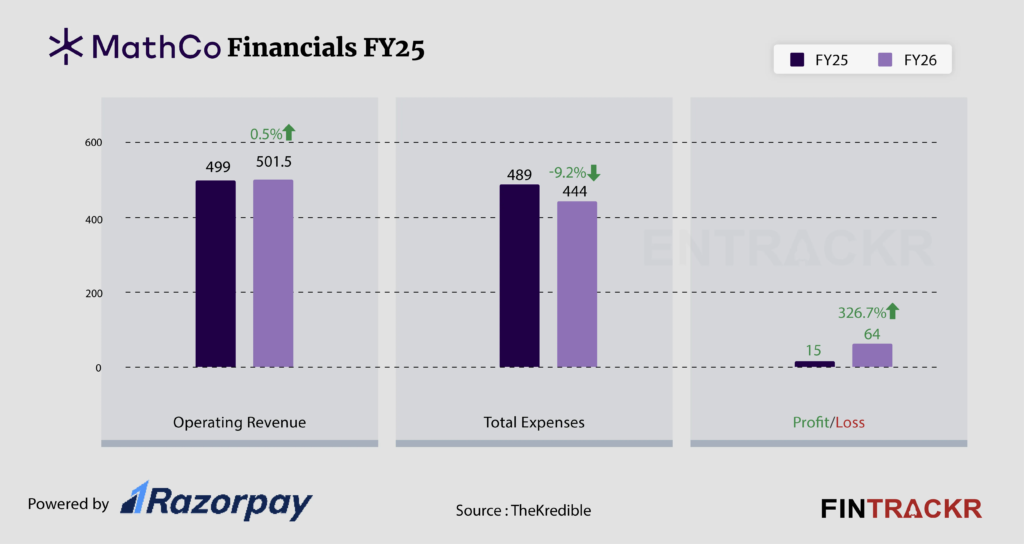
MathCo, a leader in data and analytics solutions, reported an operating revenue of Rs 501.5 crore in FY25, a slight increase from Rs 499 crore in the previous year. This growth, albeit modest, was accompanied by a substantial rise in profitability, with profits soaring to Rs 64 crore from Rs 15 crore in FY24.
- Total Income: Including other income of Rs 21.5 crore, MathCo’s total income reached Rs 523 crore, up from Rs 517 crore.
- Expense Management: The company reduced its total expenses by 9%, from Rs 489 crore to Rs 444 crore. This was primarily achieved by cutting employee benefit expenses by 7% to Rs 374 crore.
Strategic Expense Management
Employee benefits, traditionally the largest cost center, saw a significant reduction. This strategic move was pivotal in boosting profitability. IT expenses remained stable at Rs 12 crore, while depreciation costs increased to Rs 12.5 crore from Rs 8 crore. Notably, travel expenses rose to Rs 12.6 crore, reflecting potential growth in business development activities.
Profitability Metrics: A Testament to Efficiency
MathCo’s focus on efficiency is evident in its improved financial metrics:
- ROCE: Improved to 11.71%, reflecting better capital utilization.
- EBITDA Margin: Enhanced to 14.36%, showcasing effective cost management.
For every rupee earned in FY25, MathCo spent Rs 0.89, a notable improvement from Rs 0.98 the previous year. This efficiency highlights the company’s ability to generate more profit from its revenue.
Funding and Investment Landscape
MathCo has successfully raised $53 million to date, with Brighton Park Capital and Patni Wealth Advisors holding significant stakes. This funding is crucial for sustaining growth and exploring new opportunities in AI and machine learning.
Insights from the Industry
MathCo’s journey offers valuable insights into the startup ecosystem:
- Expense Optimization: A critical factor in enhancing profitability without relying solely on revenue growth.
- Strategic Investments: Leveraging funding to explore new technologies and expand market reach.
The Road Ahead: Challenges and Opportunities
While MathCo’s financial performance is commendable, it raises questions about future growth strategies. Can the company sustain this profitability amidst flat revenue growth? Exploring new markets and diversifying service offerings could be potential pathways.
Conclusion: Navigating the Future with Strategic Insight
MathCo’s story is a testament to the power of strategic financial management in the startup world. By focusing on cost efficiency and leveraging strategic investments, the company has set a benchmark for others in the industry. As you reflect on MathCo’s journey, consider how your startup can optimize resources and explore new growth avenues.
For more information on MathCo, visit their official website.
This article not only highlights MathCo’s financial acumen but also serves as a guide for startups aiming to achieve similar success. What strategies will you adopt to navigate the challenges of flat revenue growth?
Sure, I can help with that! Could you provide more details about the topic or content of the page for which you need an SEO title?
Sure, I can help with that! Could you provide more details about the content or purpose of the page you need an SEO description for?
Creating a list of SEO keywords involves understanding your target audience, industry, and the specific goals of your website. Here’s a general guide to help you generate a list of SEO keywords:
-
Brainstorm Topics:
- Consider broad topics related to your business or niche.
- Think about what your audience is interested in.
-
Use Keyword Research Tools:
- Google Keyword Planner
- SEMrush
- Ahrefs
- Ubersuggest
-
Analyze Competitors:
- Identify keywords your competitors are ranking for.
- Use tools to analyze their website and content.
-
Focus on Long-Tail Keywords:
- These are more specific phrases that often have less competition.
- Example: Instead of "shoes," use "best running shoes for flat feet."
-
Consider Search Intent:
- Understand what users are looking for: informational, navigational, transactional, or commercial investigation.
-
Include Local Keywords:
- If applicable, add location-based keywords.
- Example: “best coffee shop in Seattle.”
-
Check Search Volume and Competition:
- Prioritize keywords with a good balance of high search volume and low competition.
-
Use Related Searches:
- Look at Google’s “related searches” for more ideas.
-
Regularly Update Your List:
- SEO is dynamic; keep your keyword list updated based on trends and performance analytics.
- Group Keywords by Theme:
- Organize keywords into clusters for targeted content creation.
By following these steps, you can create a comprehensive list of SEO keywords tailored to your specific needs.