Motion Coaching’s Revenue Stagnation Reflects Broader Industry Trends
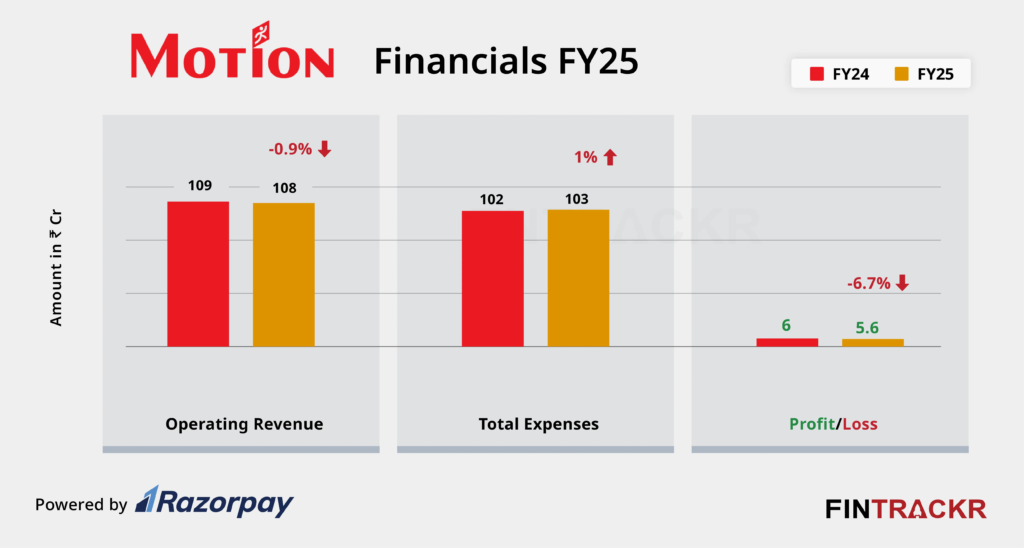
In a landscape where educational coaching chains vie for dominance, Motion, an IIT-JEE and NEET-focused institute, reported a flat revenue of Rs 108 crore for FY25, a slight dip from Rs 109 crore in FY24. Despite the stable top line, Motion saw its profit decrease by 6.7% to Rs 5.6 crore. This trend mirrors the broader challenges faced by traditional coaching institutes.
Understanding Motion’s Financial Landscape
Founded in 2007, Motion operates both offline centers and online platforms, generating revenue primarily through course fees. The company managed to maintain a total income of Rs 110 crore in FY25, thanks to Rs 2 crore from non-operating income.
- Employee Expenses: These accounted for the largest portion of Motion’s spending, increasing by 4% to Rs 49 crore, representing nearly half of the total expenditure.
- Advertising Cuts: The firm reduced its advertising and promotional expenses by 8% to Rs 12 crore.
- Legal and Rent Costs: Legal charges surged by 33% to Rs 10 crore, while rent expenses rose by 17% to Rs 5.2 crore.
Despite the stable revenue, these rising costs contributed to the decline in profit. However, Motion’s ROCE and EBITDA margin improved to 12.29% and 10.74%, respectively.
Industry Context and Competition
Motion’s performance is part of a larger trend in the coaching industry, where major players like Allen and Aakash also faced limited growth. Allen reported a revenue of Rs 3,067 crore but saw a 70% drop in profit to Rs 41 crore. Meanwhile, Aakash, linked to Byju’s, recorded a loss of Rs 2,443 crore in FY24, with stable revenue at Rs 2,438 crore.
The Challenge of Staying Competitive
Motion’s flat performance highlights the challenges traditional coaching institutes face amid rising competition and changing student preferences. The education sector is evolving, with digital platforms gaining traction. Students now have access to a plethora of online resources, often at a lower cost.
Strategies for Future Growth
For Motion to navigate this competitive landscape successfully, it might consider:
- Digital Expansion: Investing in robust online platforms to reach a wider audience.
- Innovative Offerings: Introducing new courses or learning methods tailored to current student needs.
- Cost Management: Streamlining operations to manage rising expenses effectively.
Insights from the Ground
Having worked in the startup ecosystem, it’s clear that agility and innovation are crucial. Motion’s current strategy might benefit from a more aggressive digital pivot, similar to how some tech startups have successfully scaled by leveraging technology.
A Broader Reflection
Motion’s situation is a microcosm of the challenges facing traditional educational institutions. As competition intensifies, the ability to adapt and innovate will determine success. For students and parents, the question remains: How will these changes impact the quality and accessibility of education?
As you consider the future of education, think about how technology and traditional methods can coexist. What changes would you like to see in the educational landscape?
For more information about Motion, visit their official website.
This article combines insights from Motion’s financial data with broader industry trends, offering a comprehensive view of the challenges and opportunities in the educational coaching sector.