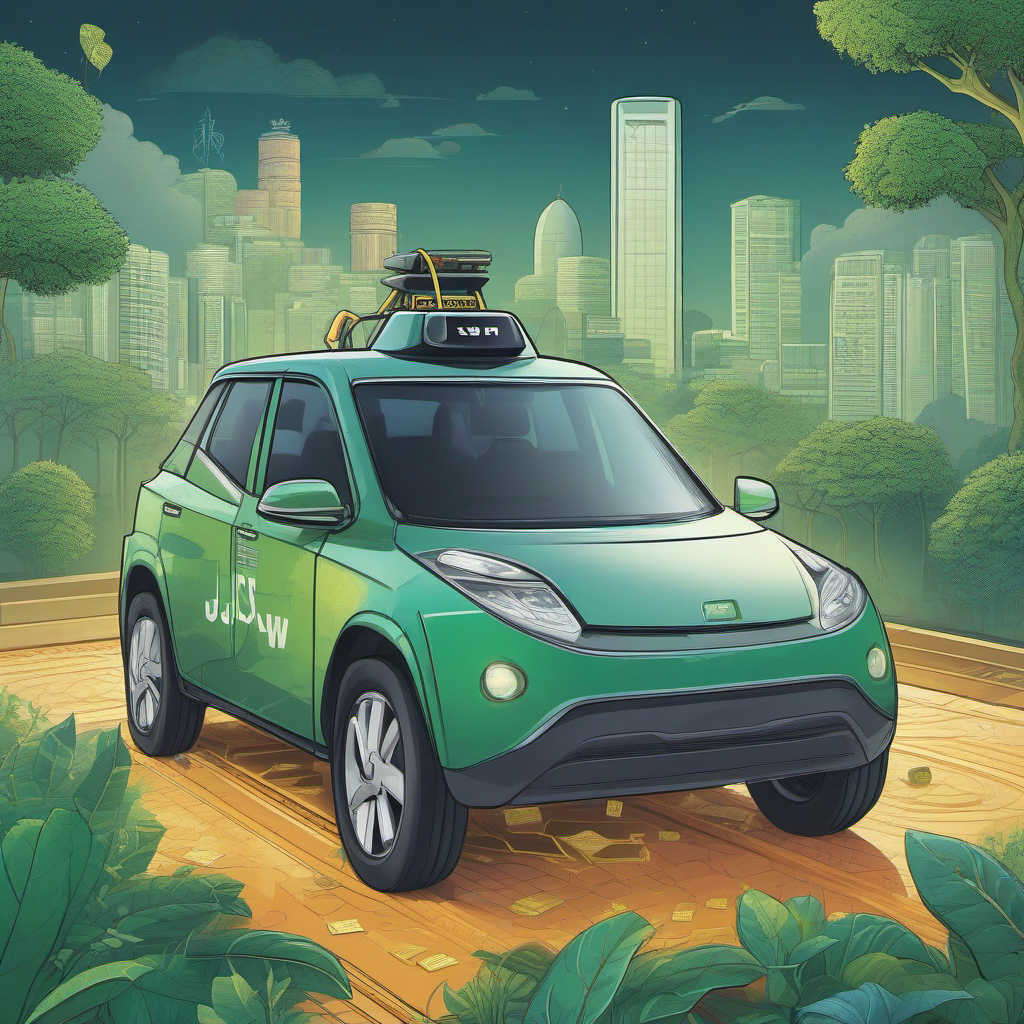
Uber and JSW Group have announced a strategic partnership to advance electric vehicle (EV) mobility within India’s burgeoning ride-hailing market. This collaboration is significant as it aligns with India’s broader push towards sustainable and cleaner transport solutions, a critical step in the country’s efforts to reduce pollution and dependency on fossil fuels.
### The Partnership: Uber and JSW Group
The partnership will be spearheaded by JSW Green Mobility, a subsidiary of JSW Group, and will focus on the development and deployment of bespoke EV solutions tailored for the Indian market. The initiative aims to cater to the specific needs of Indian riders, drivers, and fleet operators, ensuring that the solutions are not only technologically advanced but also economically viable. Key areas of focus include the design, pricing, and performance of vehicles suited to high-usage scenarios typical of urban ride-hailing operations. Additionally, the collaboration will emphasize localization and scalable deployment models for EVs on Uber’s platform.




### Context and Competition
India’s EV sector is witnessing rapid growth, driven by government incentives designed to accelerate the adoption of electric vehicles. The ride-hailing industry, characterized by high vehicle utilization rates, presents a particularly lucrative opportunity for EV integration. Uber’s collaboration with JSW Group is timely, especially as competitors like Ola and other local ride-hailing firms are also exploring similar EV initiatives. In February, JSW MG Motor, a joint venture between JSW Group and SAIC Motor, announced a $440 million investment to expand its manufacturing capabilities in India and introduce new hybrid and battery-electric models. This shows a clear commitment from JSW Group to capitalize on the expanding EV market.
### Implications for India’s Startup Ecosystem
The Uber-JSW partnership signifies a growing trend of strategic alliances between global tech giants and Indian conglomerates to leverage local expertise and market insights. This collaboration could spur further innovation and investment in India’s EV infrastructure, providing opportunities for startups specializing in battery technology, charging solutions, and fleet management software. By prioritizing scalable and localized solutions, the partnership also highlights the importance of understanding and adapting to regional market dynamics, which is crucial for startups aiming to succeed in India’s diverse landscape.
### What May Happen Next
As Uber and JSW Group begin to roll out their EV solutions, the focus will likely shift to infrastructure development, including charging stations and maintenance networks, which are critical for the success of EV adoption in ride-hailing. For founders and investors, this partnership underscores the potential and necessity of forming alliances that combine technological prowess with local market knowledge. The next phase to watch will be how effectively these companies can scale their solutions and the impact this has on India’s overall EV adoption rates.