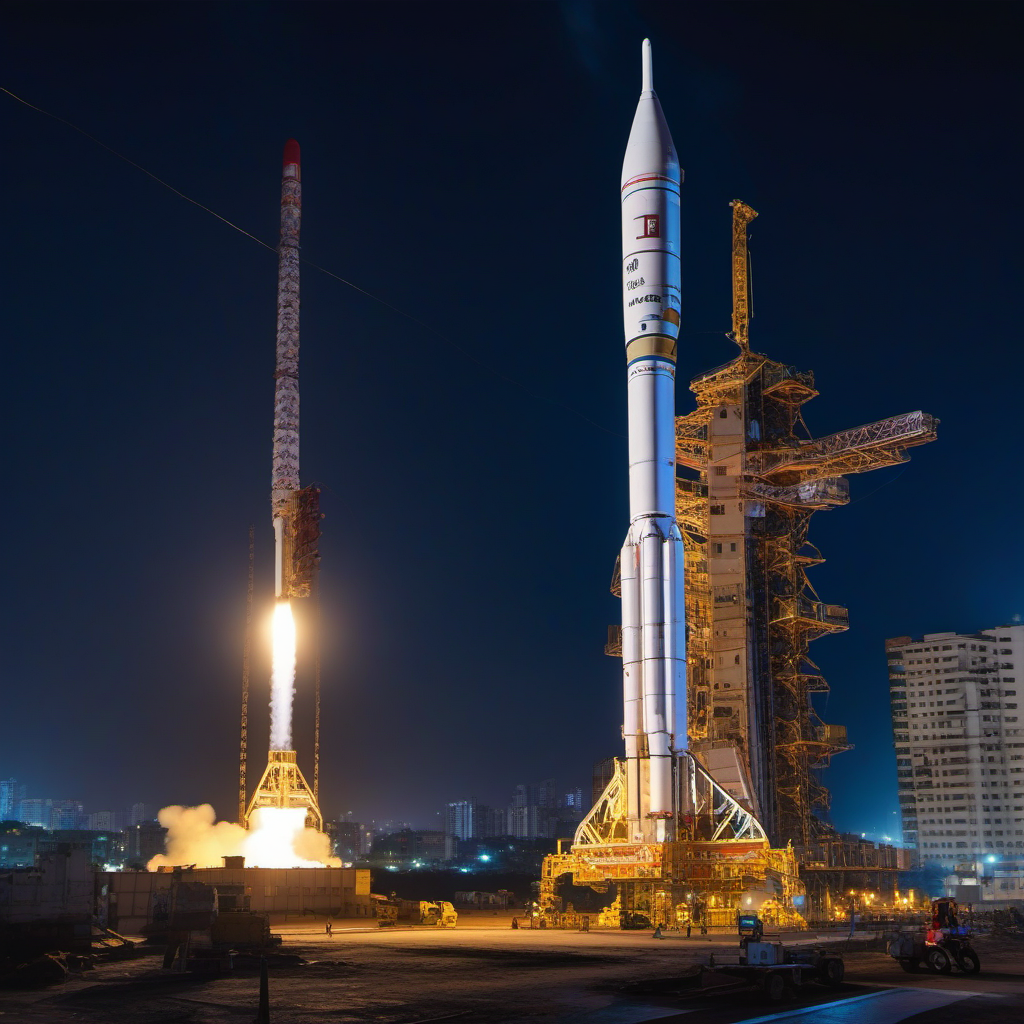
Skyroot Aerospace, based in Hyderabad, has made history by becoming India’s first spacetech unicorn. The company recently secured $60 million in a funding round co-led by Sherpalo Ventures and GIC, bringing its pre-money valuation to $1.1 billion. This milestone highlights the growing interest and investment in India’s burgeoning space sector, marking a significant achievement for the country’s startup ecosystem.
### Skyroot Aerospace: Pioneering India’s Spacetech
Founded with the vision of reducing costs in space exploration, Skyroot Aerospace has developed innovative launch vehicle technology aimed at making space more accessible. The company’s flagship product, the Vikram series of rockets, is designed for rapid assembly and launch, catering to the growing demand for satellite launches. This funding round saw participation from existing investors such as Greenko Group and Arkam Ventures, as well as new players like BlackRock and Playbook Partners. With this backing, Skyroot plans to enhance its technological capabilities and ramp up production, positioning itself as a key player in the global spacetech arena.




### Competitive Landscape and Funding Environment
The spacetech sector in India has been gaining momentum, driven by government initiatives and increasing private sector involvement. Skyroot’s ascent to unicorn status sets a precedent for other Indian spacetech startups, potentially attracting more venture capital into the industry. The success of Skyroot comes at a time when the global spacetech market is seeing heightened competition, with players like SpaceX and Rocket Lab leading the charge. However, India’s cost-effective solutions and strategic geographical location provide unique advantages for homegrown companies. The recent funding surge in Indian spacetech aligns with the global trend of significant investments in space exploration and satellite technology.
### Implications for India’s Startup Ecosystem
Skyroot’s achievement underscores the maturation of India’s startup ecosystem, particularly in high-tech sectors like spacetech. This development reflects a broader trend where Indian startups are increasingly capturing global attention and investment. The influx of capital into spacetech could spur innovation, encourage new entrants, and foster collaborations with international companies. As the first spacetech unicorn, Skyroot sets a benchmark, likely inspiring other startups to pursue ambitious goals and explore niche markets within the tech landscape. This could lead to a diversification of India’s tech portfolio, attracting talent and further investment into the ecosystem.
With Skyroot paving the way, the Indian spacetech industry is poised for exciting developments. As the company scales its operations, it will be crucial to observe how it navigates the challenges of rapid growth and international competition. For founders and investors, the focus will be on Skyroot’s ability to execute its vision and deliver on its promise of cost-effective space solutions. The next steps for Skyroot will likely involve expanding its launch capabilities and exploring partnerships with global space agencies, making it a company to watch in the coming years.