Indian Startup ESOP Buybacks Surge in Q1 2026
The first quarter of 2026 has seen a remarkable resurgence in employee stock ownership plan (ESOP) buybacks among Indian startups, surpassing the total values recorded in the entirety of 2024 and 2025. This development is significant as it marks a renewed focus on employee liquidity after a period of subdued activity in the sector.
ESOP Buybacks and Key Players
Related Posts




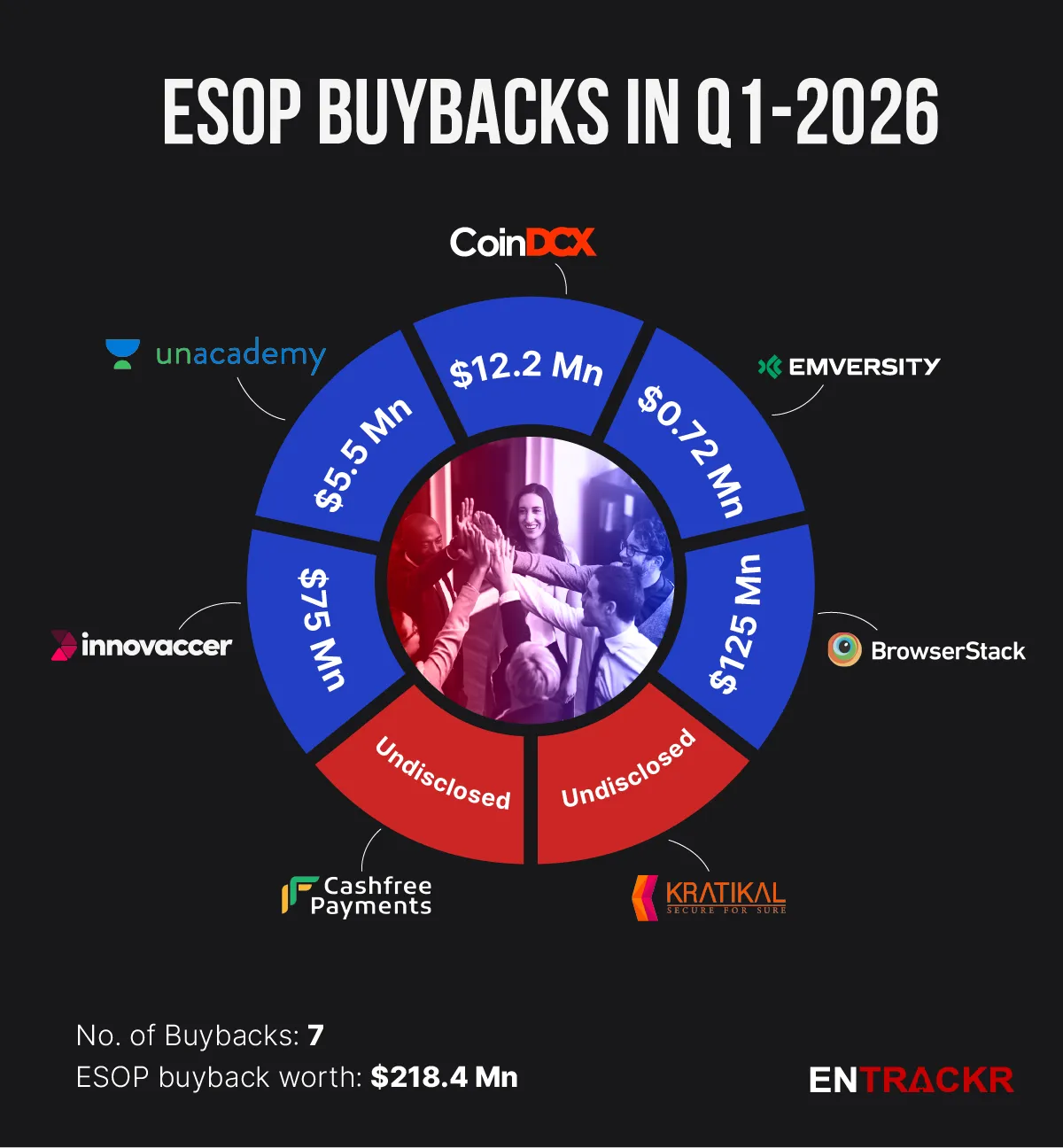
In the first quarter of 2026, Indian startups collectively executed ESOP buybacks worth nearly $220 million. Notably, BrowserStack, a leading software testing platform based in Mumbai, spearheaded this trend with a $125 million buyback program. This initiative allowed around 500 employees to sell their shares, with a substantial portion allocated to early investors like Accel.
Healthtech company Innovaccer followed suit with a $75 million buyback, benefiting both current and former employees. Meanwhile, CoinDCX, a prominent crypto exchange, repurchased ESOPs worth $12 million. Edtech firm Unacademy also participated with a Rs 50 crore ($5.5 million) buyback, providing liquidity to its workforce amid ongoing challenges in the edtech sector.
Context and Market Environment
The resurgence in ESOP buybacks comes after a slowdown in 2023, 2024, and 2025. The total value of buybacks in 2025 was just over $75 million, a sharp decline from the $802 million recorded in 2023. The 2023 figures were significantly influenced by Flipkart’s $700 million payout following the PhonePe spin-off.
The current environment reflects a shift in priorities among startups. While venture capital inflows remain strong, companies are increasingly using buybacks as a tool to retain talent and reward employees, especially as upfront incentives like sign-on bonuses become less prevalent.
Implications for India’s Startup Ecosystem
This renewed focus on ESOP buybacks underscores the evolving strategies of Indian startups to manage talent retention and liquidity. As the market matures, buybacks are becoming an essential component of compensation packages, aligning employee interests with long-term company performance.
Regulatory changes could also impact how these programs are structured. The Securities and Exchange Board of India’s decision to phase out the open-market route for share buybacks from 2025 may influence liquidity options as startups approach public listings. However, the Union Budget 2026 maintained the current ESOP taxation framework, providing stability for these initiatives.
Looking Ahead
As Indian startups continue to navigate uncertain market conditions, ESOP buybacks are likely to remain a crucial strategy for employee retention and liquidity. With companies prioritizing these programs, the trend may gain further momentum, potentially becoming a staple feature of compensation packages in the startup ecosystem. The focus on buybacks highlights the balance startups are seeking between rewarding employees and maintaining long-term growth trajectories.